
koans are old time stories about the process of working on enlightenment after you get to first base. they are called public cases in the sense that the teachings involved are meant to be accessible to anyone, not just monks training in zen communities under the auspices of teaching masters.
the blue cliff record is the preeminent collection of koans, it includes 100 cases and commentary by chinese enlightened masters, and was compiled and published in the 12th century, near the end of the tang dynasty, which historical period has been called the golden age of buddhism. there is also a nice text called secrets of the blue cliff record, translated by the unsurpassed thomas cleary, that offers additional explication and commentary by two of the greatest zen masters in japan at the turn of the 18th century, hakuin ekaku and tenkei denson. hakuin’s words speak to me directly.
bodhidharma was a meditation master from southern india who travelled to china around 500 ad and settled at shaolin temple. he is regarded as the first ancestor of zen in china, and was often referred to by the chinese as the blue eyed barbarian. in india, the traditional vehicles for getting to first base were called the paramitas of generosity, regulating conduct, tolerance, effort, meditation, and wisdom.
bodhidharma’s method was meditation, and the path of zen came to be institutionally articulated through sitting meditation. the classic riff on bodhidharma is that his method of instructing the chinese at shaolin was to sit wordlessly facing a wall for nine years. nonetheless, it is important to note that the intent is not simply to master a physical form of practice. as master hsu-t’ang wrote in the 13th century: do not under any circumstances stick to the form of sitting. when you do sit, you must employ expedient means; if you do it without inner mastery, you belabor your spirit in vain.

the first case in the blue cliff record, sort of the bedrock case of all public cases, recounts bodhidharma’s encounter with a warlord who wanted to score some cultural relevance points by associating himself with an enlightened master. the warlord arranged a meeting and asked bodhidharma: what is the highest meaning of the holy truths? bodhidharma replied, simply: no highest, not holy, and then he left town.

the referenced texts that the warlord naively thinks contain meaning and convey truth are the collected teachings of the person who initiated buddhism around 500 bc in northern india, often called the historical buddha, or shakyamuni buddha. shakyamuni was himself the son of a warlord, the head of the powerful shakya clan. he came up in the context of wealth and privilege, overprotected by his adoring father, but when he first encountered the real world, he experienced a numbing shock, and had to work through the situation on his own, his daddy couldn’t help.
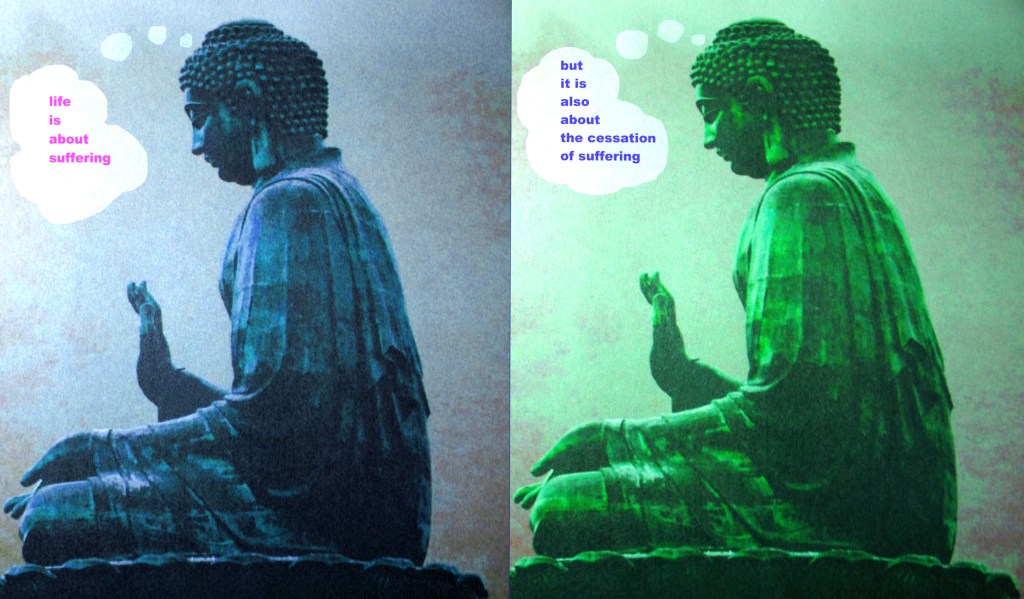
the buddha’s personal work was based on his own instinct. he looked at the hundred schools of hindu philosophy extant at the time and rejected them all as insufficient to resolve his problem, which was, how to be in the world without going nuts at what you see and experience at the hands of warlords.
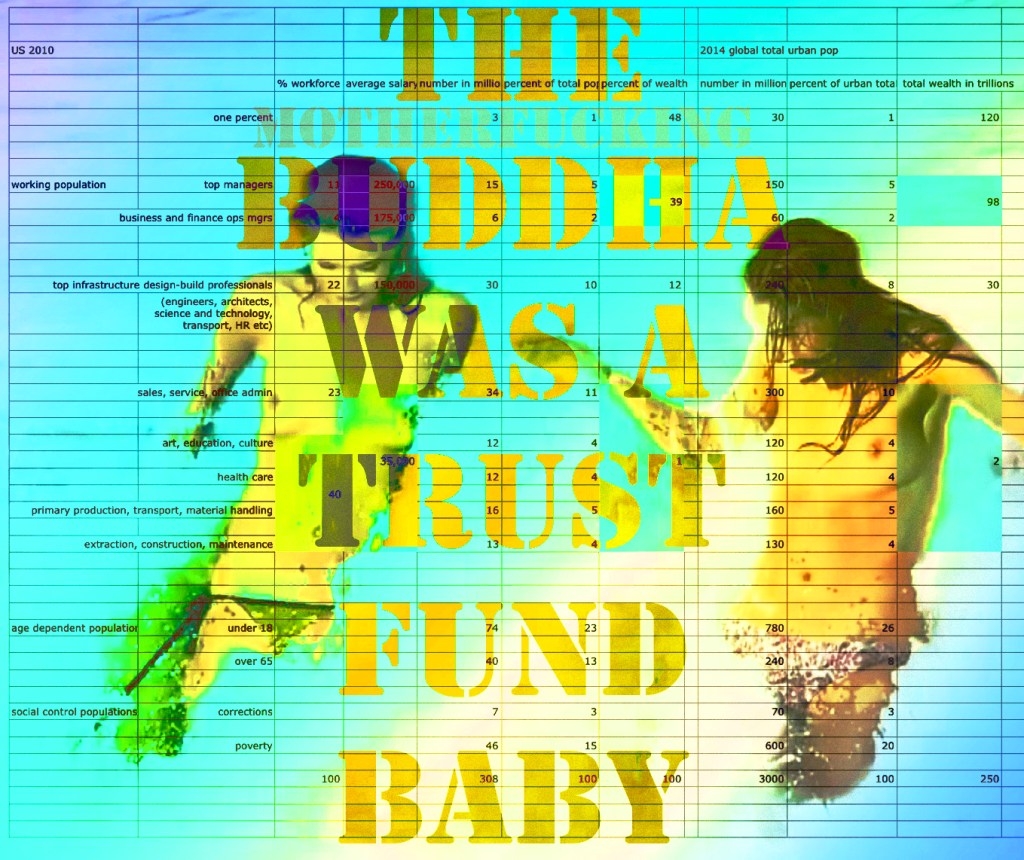
the second case in the blue cliff record is anchored in a teaching by the third ancestor of zen in china but popularized by the great master chao chou in the 9th century: the ultimate path is without difficulty, just avoid picking and choosing.
path means way of being, indicating a through-time experience, but the ultimate path is not a way of being at all, it is an unchanging state of being. getting to first, second, and third base, for most people, involves effort, or training, but crossing home plate means getting to a place that is effortless. when shakyamuni initially resolved his experience with suffering, or being in the world, he crossed home plate and got to effortless in one step. his collected teachings are called the sutras, the first, called the avatamsaka, or whole enchilada sutra, is comprehensive with respect to the buddha’s resolution, but at 1600 pages in translation, it was a little much for most people, and so he went on to teach for another 40 years, at roughly 360 teaching assemblies where he broke it down into instructions variously tailored to the people in attendance.
native peoples around the globe are humans who have always lived without infrastructure, they need buddhism like a hole in the head.
buddhism has to do with the problem of living in a world where the fundamental conditions of your ordinary lived experience are determined by warlords, by infrastructures built by the people we call the one percent.
ordinarily, your neural nets are shaped by proscribed experience, in what is described as a mapping process, but the principle of buddhism is that your connectome in its entirety has a workaround to help you with that particular, localized problem of mapped experience, because its capacities were shaped by all experience, and particularly the experience of all sentient beings, resulting in what came to be called in zen awareness of the cosmos of reality completely manifesting unity. those larger capacities and panoramic awareness all-embracing are in principle accessible by each and every one of us.
this core principle in buddhism is that, by the very nature of the connectome itself, the workaround is available to everyone, it just needs to be activated.
for most people, the activation requires discipline, but if you understand the principle, as hsuan-sha says, the buddhas are just states of your own experience, whether you are walking, standing, sitting or lying down, never is it not this.
ku-shan says, at all times avoid dwelling obsessively on things, that is, on the objects of attention that you have been preconditioned to accept and attend to, and it will be easy to unveil this, meaning the greater capacity to be in the world without having your chain yanked continuously by someone who considers you their lunchmeat.
chen-ching says, do you want the yanking chain not to continue, the falsely preoccupied mind to die out? just directly get to know the pure luminous body of the eternal true essence of awareness in yourself. then birth and death naturally will not continue, and everyone will rejoice together. this is what is called attainment once and for all time.
yuan-hsien says, if panoramic awareness is not immediately accessible, you need a method. the method is not asking someone to explain, it is not studying scriptures, it is not doing a lot of charitable acts, it is not closing the eyes and sitting as if dead. just look intently into the question of what your own original capacity is in the course of daily life. don’t think about whether this practice is hard or easy, or success in your investigation is remote or near, and don’t worry that your own conventional faculties and potentials are slow or dull, or that you are too heavily obstructed by constraining habits imposed on you by conditioned experience and people who would like to see you stay turned around forever.
just go right ahead and do your personal work, keeping concentrated right mindfulness continuous. at some point, you will bump into it all of a sudden. then the mountains, rivers, and whole earth are all one vast treasury of your own inherent light.
 householder zen